




Cybersecurity and SOC 2 readiness for startups

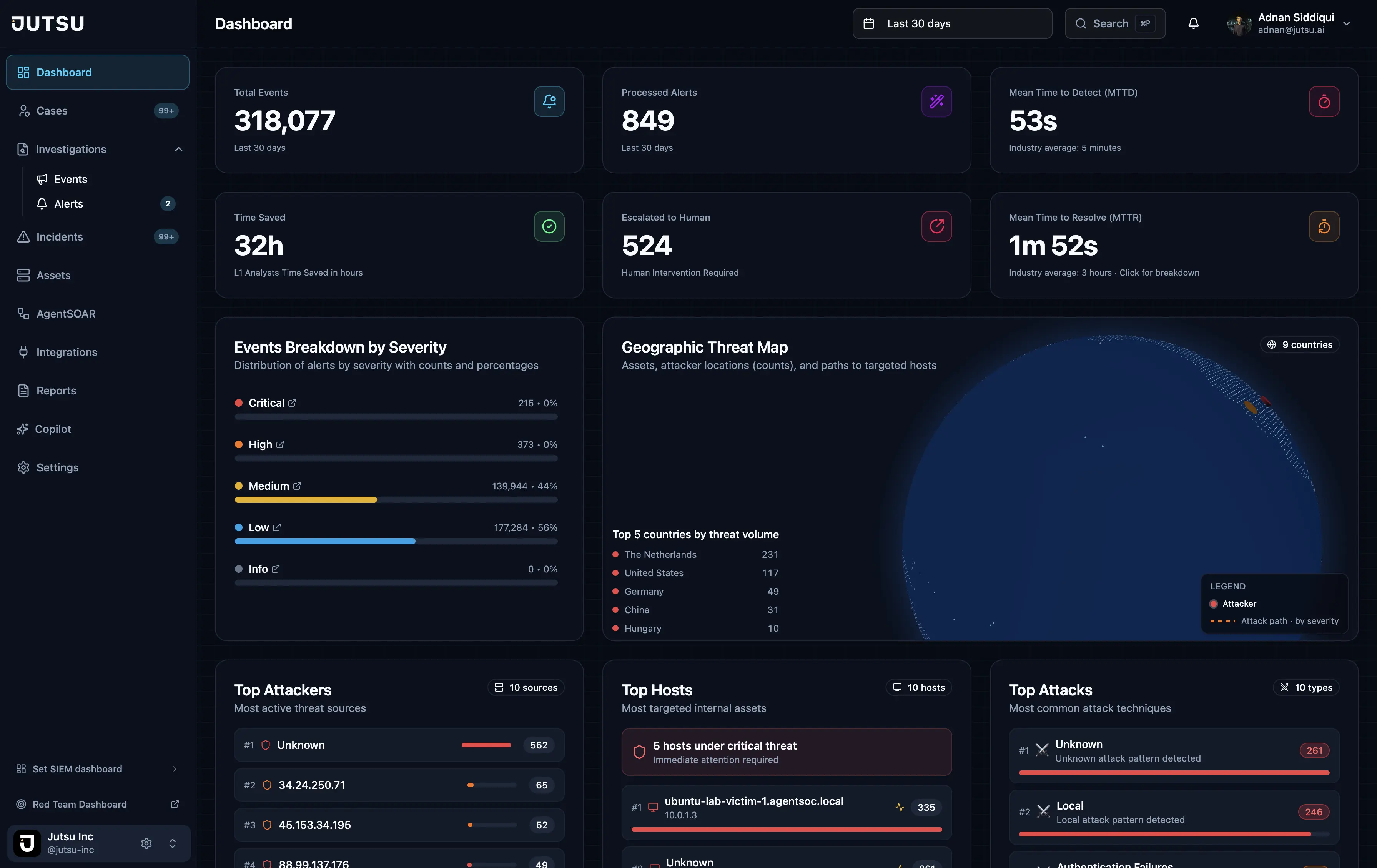
Jutsu monitors your cloud, identity, GitHub, and Windows hosts 24/7, investigates threats with AI agents, and keeps the evidence you need for SOC 2.

  • Connect cloud, identity, and code in minutes.
  • AI agents triage alerts. You approve the response.
  • SOC 2 evidence from the security work itself.
Get Started. It's FREE!Start free.
No credit card.
app.jutsu.ai
Google Cloud PlatformGoogle WorkspaceGitHubCloudflareWazuhSlack

What is Jutsu?

Jutsu is a cybersecurity and SOC 2 readiness platform for startups and growing technology companies. It monitors connected cloud, identity, GitHub, and Windows host activity around the clock, uses AI agents to investigate and help respond to threats, and turns that security work into SOC 2 evidence.

It is built for founders, CTOs, and first security hires who need real security monitoring and audit evidence without building a security operations team.

  • Cloud, identity, GitHub, and Windows host monitoring
  • AI-assisted investigation, triage, and reporting
  • Policy-guided response with humans in control
  • SOC 2 evidence from ongoing security work

Join our Design Partner Program

Work directly with the Jutsu team to shape the future of AI-native Security Operations. Get early access, hands-on support, and influence the product roadmap.

Cybersecurity built for startup teams

Startup cybersecurity starts with the systems you actually run on. Jutsu connects to each one in about 10 minutes or less and brings its security events into one detection, investigation, and response workflow.

Cloud security monitoring

Stream Google Cloud audit logs for IAM changes, API calls, and resource activity, and detect threats in them automatically.

Google Cloud monitoring guide

Audit events also connect from Cloudflare, Vercel, and Railway.

Identity monitoring

Watch Google Workspace sign-ins and Admin console changes, with Drive activity and third-party app grants when you turn them on.

Google Workspace monitoring guide

GitHub and code security

Receive secret scanning, code scanning, and Dependabot alerts, plus pushes, branch protection changes, and member and team changes.

GitHub security monitoring guide

Endpoint visibility

Collect Windows Security and System event logs, add Sysmon events when Sysmon is installed, and run osquery for compliance posture.

Windows host monitoring guide

Read the guide to cybersecurity for startups

24/7 security monitoring, from detection to response

Jutsu collects security signals, investigates alerts, coordinates response, and records the evidence your team needs.

Detect

Collect logs, normalize events, and run detections across your connected sources.

Investigate

Enrich alerts with asset, identity, cloud, and threat intelligence context.

Triage

AI agents classify and prioritize alerts so your team focuses on what matters.

Respond

Recommend or execute policy-approved actions with audit trail.

Report

Create incident reports and export security and compliance evidence automatically.

See how the autonomous SOC workflow runs

SOC 2 readiness for startups, backed by security operations

A SOC 2 audit asks for proof that controls such as security monitoring and incident response actually run over time. Jutsu records that work as it happens, so your evidence comes from real security activity instead of a last-minute checklist.

What evidence Jutsu collects

  • An audit trail of alerts, investigations, and response actions
  • Incident reports and SOC activity reports
  • Compliance posture checks for connected Google Cloud, Google Workspace, and Windows hosts
  • SOC 2 evidence exports, included from the Startup plan

Posture checks and compliance dashboards depend on your plan.

How the platform fits together

Protect → Prove → Operate

1

Protect

Monitor your connected cloud, identity, GitHub, and Windows hosts, and detect threats in their activity.

2

Prove

Turn monitoring, investigation, and response records into SOC 2 evidence.

3

Operate

Run detection, investigation, and policy-guided response around the clock, with your team approving the actions that matter.

Jutsu supports readiness and evidence collection; your team and auditor remain responsible for the audit. Jutsu does not guarantee an audit outcome.

AI-assisted security operations, with humans in control

Jutsu's SOC agents help detect, investigate, and respond to security alerts. These agents run your security workflows; monitoring your own AI agents at runtime is a separate, planned capability.

Detection Agent

Finds suspicious behavior across your environment.

Enrichment Agent

Adds threat intel, asset, user, and cloud context.

Triage Agent

Determines severity and confidence of alerts.

Response Agent

Recommends or runs policy-approved response actions.

Reporting Agent

Produces SOC and compliance reports automatically.

Learning Agent

Improves detections and reasoning from feedback.

The Jutsu platform

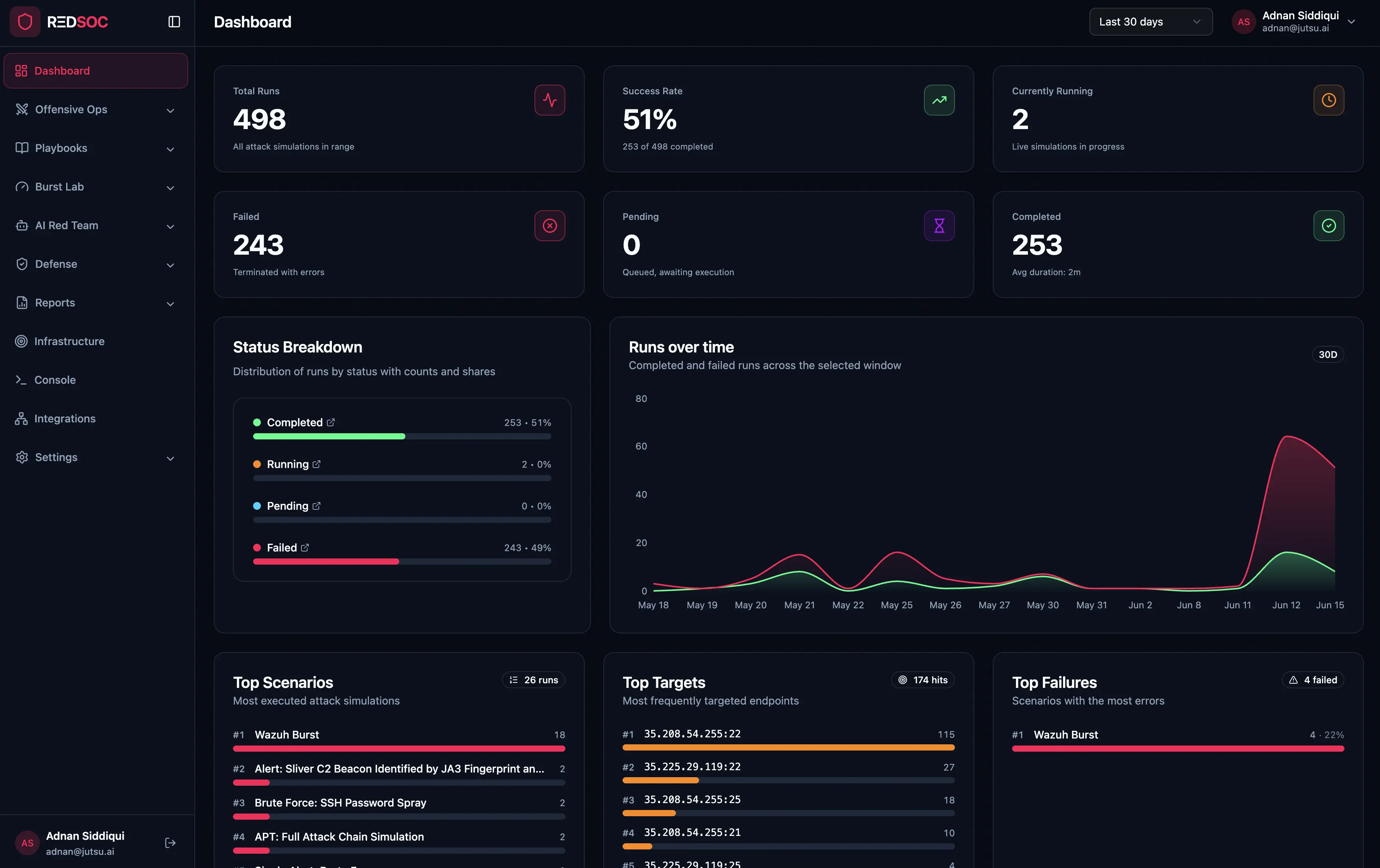
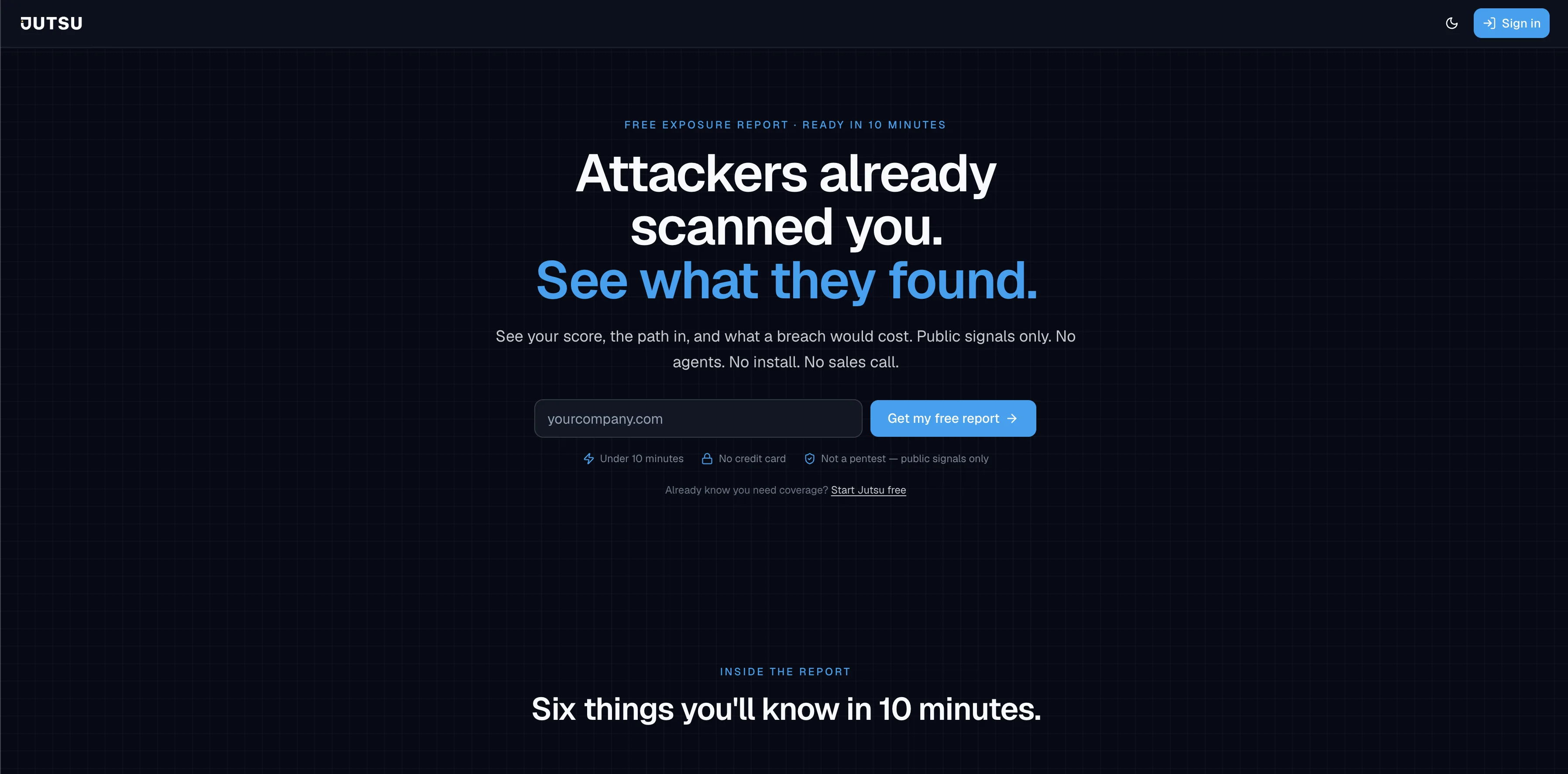
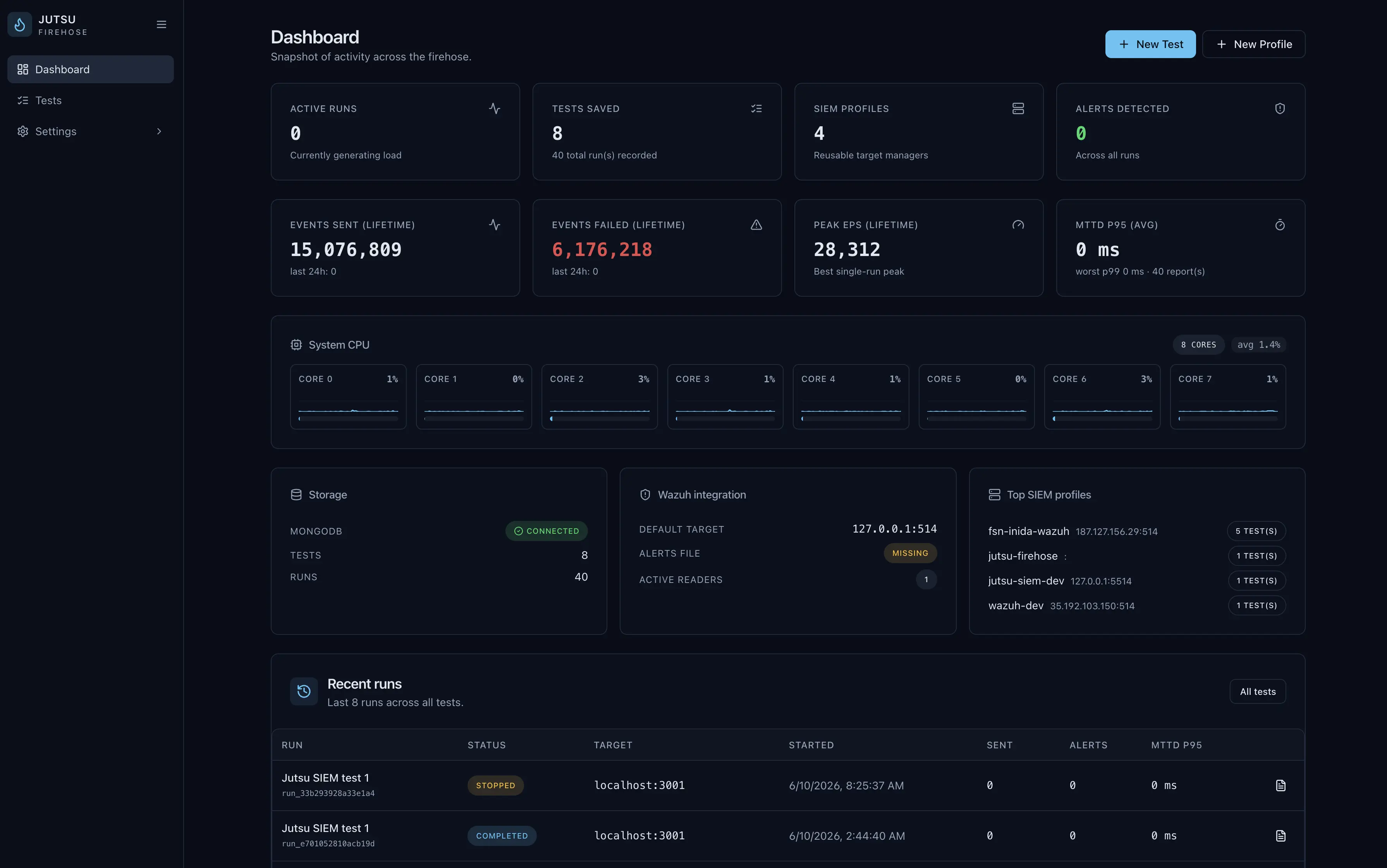
Jutsu runs detection, investigation, and response. Red Team, Exposure, and Firehose test and measure how well your defenses hold.

On the roadmap — not available today

AI agent runtime security: on the Jutsu roadmap

What is AI agent runtime security?

AI agent runtime security is the practice of monitoring what AI agents do while they run: the tools they call, the APIs and data they reach, and the permissions they act with. It gives a team a way to investigate unexpected agent behavior and keep an audit trail.

Jutsu does not offer AI agent runtime security today. It is on the roadmap: the goal is to bring agent activity into the same security operations workflow Jutsu already runs for people, infrastructure, and applications.

See what Jutsu monitors today

Design partners work directly with the Jutsu team and help shape the product roadmap.

Further reading

One security story, from people to AI agents

  • People: monitor sign-ins, admin changes, and app grants through connected Google Workspace audit logs.
  • Infrastructure and applications: monitor connected cloud, GitHub, and Windows host events.
  • AI agents, planned: extend the same Protect → Prove → Operate approach to agent activity at runtime. Not available today.

Continuous security operations, with your team in control

24/7
AI-assisted monitoring across connected systems
One workflow
Detection, investigation, triage, response, and reporting
Human control
Policy and approval gates for response actions
Audit trail
Investigation and response activity recorded
SOC 2 evidence
Security and compliance evidence exports

Pricing for startups and growing teams

Start free, then add capacity, automation, and governance as your security program grows.

Free

A focused product trial for evaluation.

$0/month
Protected assets
5
Included data
0.05 GB/day
Searchable
7 days
Total retention
30 days
AI investigations50 / month
Operational capabilities
  • Limited AI triage and basic incident view
  • 1 data source and 1 platform user
  • Community support

Startup

Most popular

24/7 AI security for funded startups.

$149/month
Protected assets
25
Included data
0.75 GB/day
Searchable
90 days
Total retention
365 days
AI investigations1,000 / month
Operational capabilities
  • 8 data sources, 30 custom rules, 8 platform users
  • Incident correlation and approval-based response
  • SOC 2 / ISO evidence exports

Growth

Automation and governance for scaling teams.

$499/month
Protected assets
100
Included data
2 GB/day
Searchable
90 days
Total retention
365 days
AI investigations5,000 / month
Operational capabilities
  • 20 data sources, 100 custom rules, 15 platform users
  • Policy-guided response and advanced correlation
  • API/webhooks and compliance dashboards

Enterprise

Let’s talk

Deployment control and SLAs at scale.

Custompricing

Enterprises, MSSPs, and shared SaaS deployments

Operational capabilities
  • Custom AI capacity, retention, and multi-tenant MSSP operations
  • Dedicated onboarding and SLA
  • Private cloud, customer-managed cloud, on-premises, and data-residency options
  • Dedicated and private environments quoted separately
Built for startups and growing teams24/7 AI-assisted monitoringPolicy-guided responseSOC 2 evidence exports
Frequently Asked Questions

Common questions about Jutsu

What is Jutsu?

Jutsu is a cybersecurity and SOC 2 readiness platform for startups and growing technology companies. It monitors connected cloud, identity, GitHub, and Windows host activity around the clock, uses AI agents to investigate and help respond to threats, and turns that security work into SOC 2 evidence.

Who is Jutsu built for?

Jutsu is built for startups and growing technology companies, usually a founder, CTO, or first security hire who needs continuous security monitoring and SOC 2 evidence without building an in-house security operations team.

What does Jutsu monitor?

Jutsu monitors the sources you connect. Documented connections cover Google Cloud audit logs, Google Workspace sign-ins and admin changes, GitHub security and repository events, Windows Security and System event logs, and Cloudflare, Vercel, and Railway audit events. It also takes alerts from Wazuh. Drive activity, app grants, and Sysmon depend on setup, and visibility is limited to connected sources.

Does Jutsu provide 24/7 security monitoring?

Yes. Jutsu's AI agents monitor connected systems around the clock, investigate and prioritize security alerts, and support policy-guided response. Your team remains in control of approvals and escalation.

What happens when Jutsu detects a threat?

Jutsu enriches the alert with asset, identity, cloud, and threat-intelligence context, prioritizes the finding, and recommends or runs policy-approved response actions with an audit trail.

Can a startup use Jutsu without a dedicated security team?

Yes. No dedicated SOC team is required to start. Jutsu automates routine monitoring, investigation, triage, and reporting. It does not replace the people who own security decisions: your team stays responsible for policies, approvals, escalations, and business context.

How does Jutsu support SOC 2 readiness?

Jutsu keeps an audit trail of alerts, investigations, and response actions, writes incident and SOC activity reports, and provides SOC 2 evidence exports from the Startup plan. It supports readiness work but does not replace your auditor or guarantee an audit outcome.

How is Jutsu different from a compliance-only platform?

A compliance-only platform is organized around the audit: policies, checklists, and collecting proof. Jutsu runs the security work itself. It monitors connected systems, investigates alerts, and supports response, then uses the records of that work as SOC 2 evidence.

How is Jutsu different from a traditional SIEM?

Traditional SIEMs focus on collecting and searching logs. Jutsu works with connected security sources and adds AI-assisted investigation, prioritization, response workflows, and reporting.

Which Jutsu integrations are available now?

Available connections include Google Cloud, Google Workspace, GitHub security monitoring, Windows hosts, Cloudflare, Vercel, Railway, and Wazuh, plus threat-intelligence and notification integrations such as VirusTotal, Slack, and PagerDuty. The integrations directory labels each one as available now or on the roadmap. Creating GitHub issues from cases is on the roadmap.

How long does it take to set up Jutsu?

Each documented connection takes about 10 minutes or less. Installing the Jutsu App on a GitHub organization takes about 5 minutes, and connecting a Google Cloud project or a Google Workspace domain takes about 10.

How much does Jutsu cost for a startup?

Jutsu has a Free plan at $0 with 5 protected assets and no credit card. The Startup plan is $149 per month and adds SOC 2 evidence exports, and the Growth plan is $499 per month. Enterprise is custom-quoted.

What is AI agent runtime security, and does Jutsu provide it?

AI agent runtime security is the practice of monitoring what AI agents do while they run: the tools they call, the APIs and data they reach, and the permissions they act with. It gives a team a way to investigate unexpected agent behavior and keep an audit trail. Jutsu does not offer AI agent runtime security today. It is on the roadmap: the goal is to bring agent activity into the same security operations workflow Jutsu already runs for people, infrastructure, and applications.

Why do AI agents need runtime security monitoring?

AI agents can use tools, call APIs, and access data on their own as they work. Watching that activity while it happens helps a team spot unexpected behavior, investigate it, and keep an audit trail. This is separate from the SOC agents Jutsu already uses to run security workflows.

Does Jutsu replace SOC analysts?

Jutsu is designed to automate repetitive Level 1 SOC work such as alert triage, enrichment, investigation, and documentation. Security teams remain in control through policy-guided workflows and human approval where required. The goal is to help security teams scale without increasing headcount.

Can I try Jutsu before purchasing?

Yes. You can start with our free plan or join our Design Partner Program to evaluate Jutsu in your environment. No long-term commitment is required to get started.

View all FAQs

Start with the security your startup needs now

Connect your first source on the Free plan with no credit card, or book a demo to see Jutsu on your own alerts.

Start free

Subscribe to our newsletter

Get the latest security tips, product updates, and news delivered to your inbox.